


 Kathryn Sears
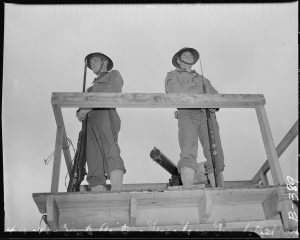
Following the bombing of Pearl Harbor, President Franklin D. Roosevelt signed Executive Order 9066, which authorized the removal of “any or all persons” from military areas on Feb. 19, 1942. Although no ethnic groups were mentioned by name, it was evidently targeting Japanese-Americans, and was strongly encouraged by the public and politicians due to war hysteria. On March 21 that same year, the United States Congress enacted legislation which made a violation of Executive Order 9066 punishable with jail time and a $5,000 fine.
On March 29, 1942, General DeWitt issued Proclamation No. 4 which forced the removal of all Japanese-Americans on the West Coast, “alien and non-alien,” with 48 hour notice. This forced over 126,000 Japanese Americans into internment camps, which now serves as a telling account of how xenophobia and propaganda seep through everyday politics.
Japanese immigrants gained prominence in America after the Chinese Exclusion Act of 1882, which forced Chinese workers out of California after white labor unions and politicians accused them of “stealing jobs.” Ironically, there was an increase in demand for cheap labor workers in agricultural farming areas following their removal, and Japanese immigrants moved to California to make up for the deficit. Working for white farmers, they began building stability by working until they could afford barren land for farming, leasing and renting.
As demand for their produce grew, they started to be viewed as an economic threat by white farmers. Much like the story of Chinese immigrants, the Japanese quickly faced anti-Asian bigotry, especially in 1905 after Japan beat Russia in the Russo-Japanese war. The Sacramento Bee publisher Valentine S. McClatchy, who was a leader of California’s anti-Japanese league, said the perseverance of the Japanese is what made them most dangerous.
For California Senator James D. Phelan, the main concern remained rooted in financial and occupational insecurity. Phelan wrote to presidential candidate Woodrow Wilson in 1913 claiming Japanese people were driving white men off the land, making them a “blight to our civilization,” and later campaigned to be a U.S. Senator on the slogan, “Keep California White.”
Phelan was not alone. Labor groups with thousands of members, including the Japanese and Korean Exclusion League and Anti-Jap Laundry Leagues, were champions of the Alien Land Law that passed in 1913, which denied Japanese people the right to own land.
California State Attorney General Ulysses Webb, one of the authors for the law, reinforced the discriminatory intentions in a 1913 speech, stating the basis of the law is “race desirability.”
In response, President Wilson released a statement drafted by Phelan defending the Alien Land Law, saying “We cannot make a homogenous population out of people who do not blend with the Caucasian race.”
Over time the law only became stricter, and by 1927 it had expanded to deny Asian immigrants, their American-born children and Asian-immigrant owned corporations from owning land. According to Fatma Marouf, author for Southern California Law Review, the law led to over 30,000 farmers abandoning nearly 500,000 acres of land.
“The California law carried criminal penalties and resulted in successful prosecutions.” Marouf wrote. “Beyond these penalties, the law had a severe psychological impact, demoralizing and subordinating Japanese Americans.”
Demoralization grew when suspicions of a rivalry between Japan and America increased in the 1930s. A report from the U.S. military’s Joint Planning Committee submitted a report addressing potential security threats in Hawaii in 1936. The report said Japanese naval personnel, including letters from relatives, delivered to Hawaii were centered around pro-Tokyo propaganda, stating “Every effort of Japanese naval personnel ashore appears to be deliberately calculated to advance Japanese nationalism.” When the report reached President Franklin D. Roosevelt, he proposed that every Japanese citizen or non-citizen on Oahu who interacts with the ships should be identified and put on a list “of those who would be the first to be placed in a concentration camp in the event of trouble.”
When Japan’s attack on Pearl Harbor on Oahu occurred on Dec. 7, 1941, the government acted immediately. Within hours of the attack, FBI agents raided Japanese American homes, and Issei community leaders, who were already labeled threats previously, were arrested and labeled “enemy aliens.”
Politicians throughout America expressed extreme resentment for the Japanese-American population, with Idaho’s Attorney General Bert Miller saying America should stay a “white man’s country.”
“All Japanese [should] be put in concentration camps for the remainder of the war.” Miller said in a governor’s meeting on April 7, 1942.
Additionally, in the same meeting, Wyoming Governor Nels Smith said if evacuees were to relocate in Wyoming, “There would be Japs hanging from every Pine tree.” Smith also ensured Japanese-Americans must be kept in concentration camps and removed when the war is over, according to the United States Department of the Interior National Parks Service.
Following Executive Order 9066, measures increased, as posters reading, “Instructions to all persons of Japanese ancestry” were placed across the West Coast, informing Japanese-Americans “both alien and non-alien” of their imminent removal and incarceration. The War Relocation Authority, created by Roosevelt in March of 1942, was responsible for removing Japanese-Americans and organizing camps. Two-thirds of the Japanese-Americans taken to the camps were Japanese citizens by birth.
Japanese-American bank accounts and assets were frozen by the government, and they were forced to close or sell businesses, shops and farms at a severe discount while leaving behind pets and belongings. Families were given tags labeling their identity and “family units” to be worn on clothing and put on bags. From there, they were then put on buses and taken to be temporarily detained in “assembly centers” where they were housed in horse stalls before being moved to internment camps. Some locations of assembly centers in California include Fresno, Merced, Sacramento, Stockton and Sonoma.

Sacramento’s assembly center was only open for fifty-two days, with an inmate population reaching 4,739, and was located on what is now Walerga Park. Inmates came from Sacramento and Elk Grove, which at the time were areas heavily populated by Japanese-Americans. According to Densho Encyclopedia, inmates lived in poor conditions, including having to use pit latrines and occupying buildings that were misshapen due to their poor construction. In the center, there were fifteen births and one death. Most of the assembly center population was eventually sent to Tule Lake internment camp by the end of June 1942, including Mitsuye Endo.
Endo, born and raised in Sacramento and graduate of Sacramento Senior High School, is famously the woman behind the landmark supreme court lawsuit that helped propel the closing of the internment camps in the West Coast in 1945. Working with lawyers Saburo Kido and James Purcell after she got fired from her job for being Japanese-American, her lawsuit persisted as she was sent to camp alongside her family.
In the internment camps, Japanese-Americans stayed in Army-style barracks that forced families to live in single rooms. The rooms were furnished with cots, a coal-burning stove and a single ceiling light bulb, with running water only being offered in communal facilities, according to Donna K. Nagata, author for the National Library of Medicine.
“Incarcerees endured harsh camp climates (including extreme temperatures and dust storms), substandard medical care and education, as well as instances of food poisoning and malnutrition.” Nagata writes, adding that important aspects of Japanese family relations were also disrupted with English requirements giving young bilingual adults more power than elders.

Disparities continued as adult incarcerees were required to take “loyalty questionnaires” to separate “loyal” and “disloyal” Japanese-Americans. Notably, question number 27 asked if they were willing to serve in the Armed forces of the United States whenever ordered, with 28 asking if they swear “unqualified allegiance to the United States of America” to faithfully defend from any or all attack while “forswearing any form of allegiance or obedience to the Japanese emperor.”
The question of willingness to serve a country with decades of discriminatory actions and laws was made worse when 1,5000 Japanese-American soldiers were drafted directly from internment camps.
Ben Takeshita, an incarceree, said number 28 was unfair to the elders or parents who were born in Japan and immigrated legally, but could not become citizens because of the American Alien Land Law. This made proving loyalty difficult because they swore to the Japanese emperor at one point, but were now swearing to the United States, even though they were born in Japan and were denied United States citizenship.
“It was a dilemma, because like my parents, if they answered ‘yes,’ then they would be a person without a country.” Takeshita explained in an interview with the Densho Digital Repository, an online archive chronicling the Japanese-American incarceration experience.
Despite these factors, the persistence of Japanese-Americans was prominent throughout the camps. Although the incarcerees were not required to work, many did to establish normalcy, build community and provide through actions like teaching in poorly equipped classrooms, working libraries and raising crops and animals.
In an interview with KCRA 3, Sacramento Congresswoman Doris Matsui (D-CA), who was born at the Poston, Arizona internment camp, said her parents told her about how internees organized to make life bearable.
“I think through all of this, they understood how important it is to work together, be part of a community,” Matsui said.
The events were documented by photographers hired by the War Relocation Authority, including Dorothea Lange, who gained popularity from her 1930s Great Depression photography. Lange photographed the removal process, farms and businesses closing while families and friends bond for the last time. Her hiring was part of the government’s effort to demonstrate goodwill through propaganda, as photos were carefully selected and distributed to newspapers while a vast majority were impounded, including photos of the removal process that included armed US soldiers and Japanese-Americans in United States military uniforms.
Just four months after Lange started, the WRA released her and withheld her photos from the public. Other photographers, like Clem Ambers, also had his candid images impounded, as they were not endorsed by the WRA. Yet, photos from Ansel Adams, which were centered around smiling faces and positive depictions of the western landscapes, were released to the public. It wasn’t until 1972 that Lange’s photos were widely seen by the public at California Historical Society’s Executive Order 9066 exhibit.
“They wanted a record, but not a public record,” Lange said in the 1960s when asked about her wartime experiences.
The WRA’s propaganda efforts are also represented in their “Japanese Relocation” film produced in 1943 and narrated by Milton S. Eisenhower, American academic administrator and president of American universities. The film states that Japanese-Americans “cooperated wholeheartedly” and “the many loyal among them felt that this was a sacrifice they could make on behalf of America’s war effort.”
“The military and civilian agencies alike determined to do the job as a democracy should with real consideration for the people involved.” Eisenhower said, adding, “We are protecting ourselves without violating the principles of Christian decency, no matter what our enemies do.”
In 1946, the last of the camps were closed after Japan’s surrender from the war. Everyone leaving the camps was given $25 and a train ticket to their pre-war address, but many did not have a home to return to. Racism against Japanese-Americans persisted, and many fell homeless because of employment and societal discrimination, especially toward the older generations of Japanese-Americans.
The thousands of formerly interned Japanese-Americans did not receive an apology or reimbursement until the Civil Liberties Act of 1988 was signed by President Ronald Reagan 46 years after their release.
And it wasn’t until 2010, over 65 years later, that President Obama awarded the Congressional Gold Medal to thousands of Japanese-Americans for their sacrifices after more than 33,000 Nisei volunteered to serve during World War II.
The historical relationship between Japanese-Americans and the United States leading up to the establishment of Japanese internment camps represents how racism works progressively through the system to alienate immigrants by labeling them as threats who are less than human. The United States government’s actions towards over 126,000 Japanese Americans should not be forgotten, as history will start, and has been, repeating itself.


Kathryn is the main contributor to the quiz section of LaDailyGazette.com. If you have an idea for a quiz, let us know.