


 Kathryn Sears
With the stroke of a pen on July 4, 2025, President Donald Trump signed into law what many are calling the most severe rollback of the social safety net in a generation. The 2025 Budget Reconciliation Bill—dubbed the “One Big Beautiful Bill Act”—includes sweeping cuts to the Supplemental Nutrition Assistance Program (SNAP), threatening to upend food access for millions across the country.
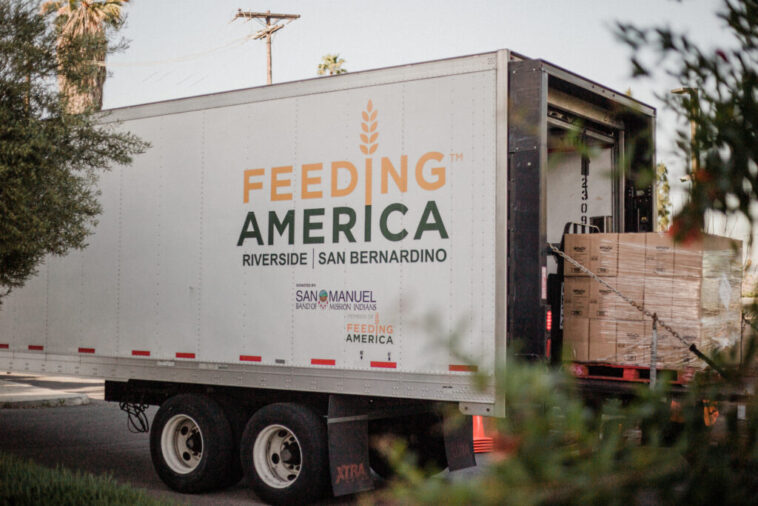
After IECN had a phone call with Feeding America Riverside | San Bernardino (FARSB) on July 25, it’s evident that the organization is already bracing for impact.
When asked how she responds to those who believe programs like SNAP are abused or used as a lifelong crutch, FARSB CEO Carolyn Fajardo acknowledged the concern but emphasized the organization’s commitment to acting in good faith.
“Honestly, those are valid concerns,” she said. “We can’t stop every case of misuse—but what we see are families in crisis, people with chronic illness, single parents trying to make it work. We operate with the best intentions, and we hope those coming to us are doing the same.”
“Still,” Fajardo continued, “we simply cannot fill the gap that SNAP leaves behind. People already think these programs are being abused, but the truth is, most of the families we serve are barely surviving. If these cuts go through, they’ll turn to us—and we are not equipped for that.”
The legislation, passed by the House on July 3 following Senate modifications, overhauls SNAP by expanding work requirements, shifting financial responsibility to states, restricting utility allowances, and freezing updates to the Thrifty Food Plan—despite record inflation in food prices.
In California alone, $36 billion in SNAP benefits are on the chopping block. Nationwide, up to 5 million families could lose food assistance.
For working-class households, the impact could be immediate and devastating. The maximum monthly SNAP benefit is $292 for one person, $536 for two, $768 for three, and $975 for a household of four.
“We had a family of five—a Chinese asylum-seeking family—who were only getting $292 through their youngest child. That little bit was keeping them afloat,” said Fajardo.
While federal lawmakers frame these changes as a push for personal responsibility, Fajardo said they overlook the reality on the ground.
“There’s this misconception that SNAP is a lifelong crutch,” she said. “Yes, some people rely on it longer than expected—but many are facing temporary crises, health issues, or are elderly and on fixed incomes. These aren’t freeloaders. These are your neighbors.”
Erica Olson, CalFresh Outreach Coordinator at FARSB, echoed that sentiment.
“Most of the clients we serve are recently unemployed, disabled, or retired seniors living off Social Security,” Olson said. “To assume they’re abusing the system is not just unfair—it’s inaccurate.”
She shared the story of a disabled lift driver battling kidney failure who lives alone in a mobile home. His entire food budget hinges on the $292 maximum SNAP benefit.
“If that amount drops even slightly, I don’t know how he survives,” Olson said.
Currently, SNAP provides nine meals for every one that food banks distribute. Fajardo said the idea that local nonprofits can pick up the slack is “naive and dangerous.”
“We rely heavily on donated goods—and what we get isn’t always nutritious,” she said. “Often it’s damaged pallets, products near expiration, or junk food that doesn’t meet the dietary needs of our community.”
FARSB operates 10 direct programs, including a senior mobile pantry that delivers over 90,000 pounds of food monthly to 10 sites across Riverside and San Bernardino counties. In May alone, the program served 2,900 senior households. The new law raises work requirements for SNAP from age 55 to 65—potentially stripping benefits from many of those very seniors.
“Fixed incomes aren’t keeping up with utility costs or food prices,” Fajardo said. “We’re seeing older adults forced into impossible decisions—skip meals or skip meds.”
To prevent long-term reliance on our services, FARSB has partnered with community organizations to offer monthly resource fairs that connect residents to job training, immigration support, mental health services, and resume development. But Fajardo says wraparound services are only part of the solution.
“Cutting SNAP and Medicaid at the same time? That’s a direct attack on stability,” she said. “There are other ways to balance the budget without ripping away essential lifelines.”
Under the new law:
- SNAP will shift financial burden to individual states, likely triggering inconsistent benefit levels.
- Work requirements now extend to adults up to age 65, including parents with children as young as 7.
- Utility allowances used to calculate benefit amounts are restricted to elderly and disabled households only.
- Quality control standards are tightened to an unrealistic $0 tolerance, which could increase administrative errors and disqualifications.
- Updates to the Thrifty Food Plan are frozen, further eroding purchasing power as prices rise.
The strain is already visible. Donations to FARSB have dropped as corporate sponsors reduce giving to address their own financial pressures.
“Our budget is tight, our resources limited, and the demand is growing,” Fajardo said. “And the worst part? Most families don’t even realize yet that these cuts are coming.”
Olson added that public awareness remains low. “People call in embarrassed, saying they’ve hit a rough patch. That’s why SNAP exists—for emergencies. Without it, we’re not just risking hunger. We’re breaking a promise to our communities.”
Fajardo concluded with a direct appeal to policymakers.
“If you want to reduce reliance on food assistance, invest in communities. Cutting safety nets isn’t reform—it’s abandonment.”
Learn more about the organization here.

Kathryn is the main contributor to the quiz section of LaDailyGazette.com. If you have an idea for a quiz, let us know.