


 Kathryn Sears
On June 2, Richmond voters will cast ballots in a primary election. Richmond Confidential interviewed the two District 3 candidates and the three District 4 candidates, either in person or by phone, unless noted. We are publishing their verbatim responses, with light editing for clarity or brevity.
District 4 includes Hilltop Village, Hilltop Green, Fairmede/Hilltop, Greenridge Heights, Quail Hill, May Valley, Greenbriar, Sobrante Hills, Carriage Hills North and South, and the Castro Heights neighborhoods.
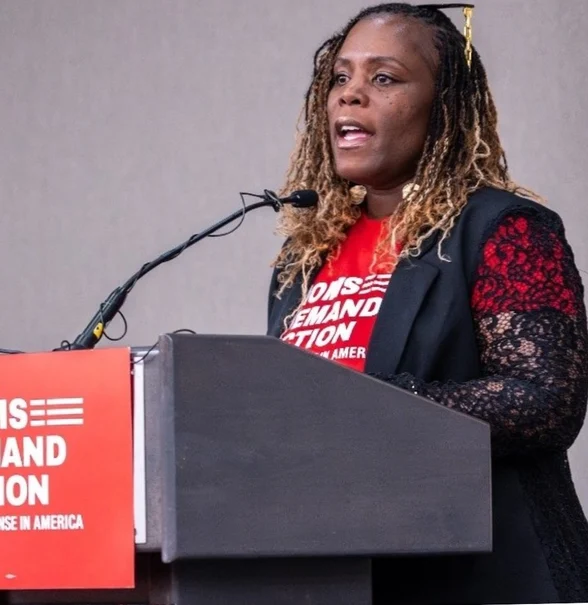
Keycha Gallon, District 4 challenger
What are District 4’s top two priorities and how would you address them?
It really depends on who you ask in District 4. Some people have concerns with the dog parks, some people have well, lack of not having dog parks. Some people have concerns of not having bathrooms at ‘Cheese’ Park. And then, of course, there’s the wildfire issue and just making sure that the stakeholders are prepared in case of an emergency. But getting more programs, enrichment programs, up there for the youth is also a priority. … I plan on putting more programs up there and with the understanding that every kid has to grow, and just because they live in a particular area doesn’t necessarily mean that they don’t need the services that they’re getting in the underserved areas or, you know, just create equity all around. That’s my whole goal, equity.
Keycha Gallon, 51, executive director of Keyz 2 The Future and a pharmaceutical technician
Political experience: California Violence Intervention and Prevention steering committee; Richmond Participatory Budgeting steering committee;
Education: bachelor’s and master’s degrees in business administration, Colorado Tech University
How would the Chevron settlement money be best put to use in District 4?
I feel that everything runs parallel. We need a stronger structure for homelessness and that means really assessing what the homeless community needs. Whether it’s mental health, whether it’s finding them a job, because at the end of the day we can’t place people in housing without fixing the underlying problem. And then you have public safety. Everything runs hand-in-hand. You get everybody situated in the homeless sector, you get everyone a job, you’ll cut back on a lot of the crime, because crime comes from people not having things. And I’m not going to say it’s going to take away all the crime, but you’ll take away the bulk of the crime once you start paying attention to the homelessness, fixing that part. But then when you fix it, you’re fixing it where these people are stable. … It’s the same thing with building pipelines so that we do have people employed. I feel like some of that shared bond money should go to building pipelines where the people in the city of Richmond should have first priority to city jobs. And that way, you keep the city dollars within the city. And we don’t do that a lot. You know, people come here from other cities. They work and then guess what? Those dollars follow them. They’re not necessarily supporting the city. Building more sites where it’s tourism. Because if you track outside dollars, you grow Richmond. More enrichment programs. Funding our youth because they are our future.
Creating more [Career Technical Education] back in the schools where you have that training. Because every child is not going to go to college. We know that. We see it. So just making sure that they have that foundation to where, as when they do get out of high school, they have the ability to go out and start a trade or because they learned a trade while they were in high school. So leaving high school, you have that trade. Guess what? You have less opportunity or less room to go and create a crime.
So just making sure we put things in place where we’re really growing the economy, growing Richmond, and growing the people within Richmond.
Would you be likely to support the continued use of Flock license plate readers when that question returns to the council this year?
I do support it. I am a gun violence survivor. I lost my brother to gun violence. Those cameras and a lot of people say, ‘Oh, well, it’s a privacy issue.’ If you have a debit card with a chip, that’s the privacy issue. Because guess what? Your data can be accessed. If you have a computer, if you have a cellphone, your data can be accessed. If you have a driver’s license, your data can be tracked. So either way it goes, you’re going to be tracked some way. … And then even with the smart IDs, I don’t know if you’ve been into the airport lately, but as soon as you go into that airport, they scan your ID, all your information populates. They’re tracking you. So at the end of the day, if we can save a life, go find a car that’s been stolen, it’ll cut down on the crime rate because nobody really wants to get caught on camera unless you’re just that crazy or stupid. But it’s a safety measure and I get that they feel like it’s protecting the immigrants. But let’s be real. If they want to come in here, [Immigration and Customs Enforcement] wants to come in here, we can’t stop it. But there has not been an ICE siting in Richmond. So we have to make sure that everyone’s protected and that goes back to equity. … So we just have to figure out, how do we meet in the middle and make everyone safe and not take that safety blanket from … certain communities?The goal is to protect everyone.
What makes you the best candidate?
I have a love for Richmond because I lost my brother in Richmond. I know what Richmond was before it became what it is today. I came up in a time where neighbors loved each other. Everyone was family. We were color blind. I really didn’t know that it was a color issue until I became an adult. Just growing up, whatever neighbor house you were at, if they were serving dinner, that’s where you ate at. … But Richmond is so divided, and I think it’s the the bigger entities that are put in place to actually help us, but it’s really causing a division, and I don’t think that they really understand that they’re causing a division. Then the resources are not spread evenly because they shift the resources for our most vulnerable population. But it’s a lot of vulnerable populations out here in Richmond. So how do you choose who gets the money without creating disparities? Because it’s a lot of disparities out here.
When I came back to Richmond all the way up until this year, I was using 25% of my wages to actually put services and programs together for the youth because in Richmond, the dollars wasn’t reaching this area right here, and that’s how I ended up here. Then my brother died in this area, but they didn’t have really anything in the preventative care for the kids. You have to be within shooter age or at-risk age for funding to really hit. So we just left all the younger people out here to fend for themselves. And then even with that it was like, why do we wait till they turn to an at-risk age and they’re starting to get into trouble? And it’s hard to roll things back because they’re already conditioned to do whatever it is that they’re conditioned to do.
(Photos courtesy of the candidate)
Coming Saturday: A Q&A with District 4 candidate Jamin Pursell

Kathryn is the main contributor to the quiz section of LaDailyGazette.com. If you have an idea for a quiz, let us know.