


 Kathryn Sears
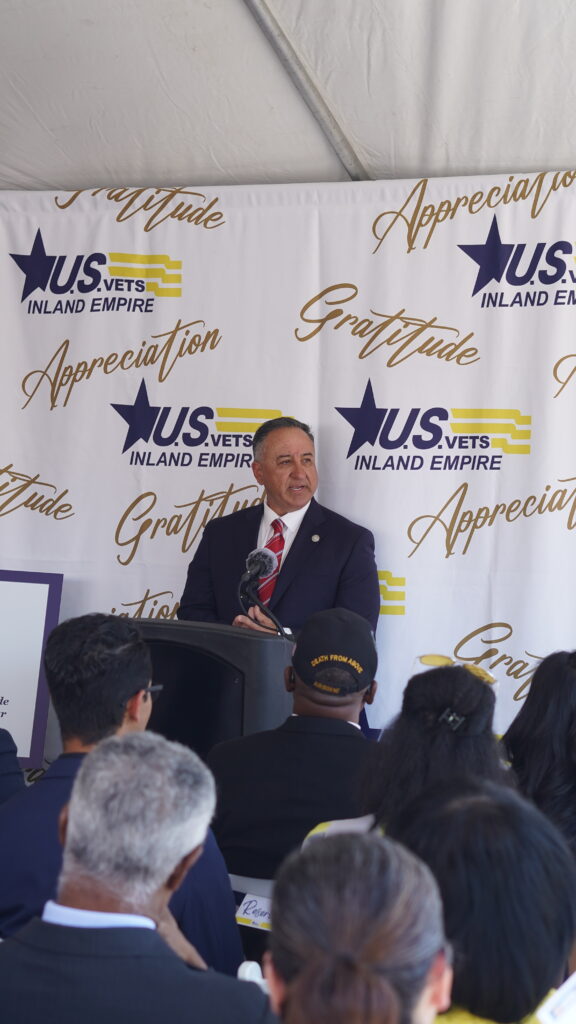
San Bernardino officials, housing partners and veteran advocates broke ground last week on a $28 million affordable housing development that will bring 30 one- and two-bedroom permanent supportive housing units to veterans experiencing homelessness, a project made possible in part by land donated by Holocaust survivor John Boruchin and his wife, Dora.
The E Street development is being led by U.S.VETS and Kingdom Development Inc. in partnership with the city of San Bernardino and San Bernardino County. In addition to housing, the project will offer on-site supportive services through U.S.VETS, including mental health care, career development and peer engagement. Speakers at the ceremony said more than 500 veterans in the Inland Empire remain unhoused.
The significance of the project extends beyond housing itself. Boruchin, who survived the Holocaust and was liberated by American troops during World War II, donated one of two San Bernardino parcels with his wife as an expression of gratitude to the soldiers who helped secure his freedom and made it possible for the couple to rebuild their lives in San Bernardino County.
Richard Hirschhaut, national campaign director for the West at Jewish National Fund-USA, said the groundbreaking carried deep personal and historical meaning because of Boruchin’s story and the purpose behind the gift.
“For the Boruchins, this is an opportunity to help those who have given their utmost in defense of our freedom and the values we cherish,” Hirschhaut said. “It is also a way to help them regain a measure of dignity and humanity.”
San Bernardino Mayor Helen Tran said the development is intended to provide more than shelter.
“This 30-unit affordable housing community will provide more than just a roof over someone’s head,” Tran said. “It will offer stability, dignity and a pathway to independence for veterans who need it most.”
Tran said the San Bernardino City Council unanimously approved a $4 million investment in the project in November, underscoring the city’s commitment to veterans and their families. She said the permanent supportive housing model will combine stable housing with critical on-site services, including case management and employment support, to help residents rebuild their lives.
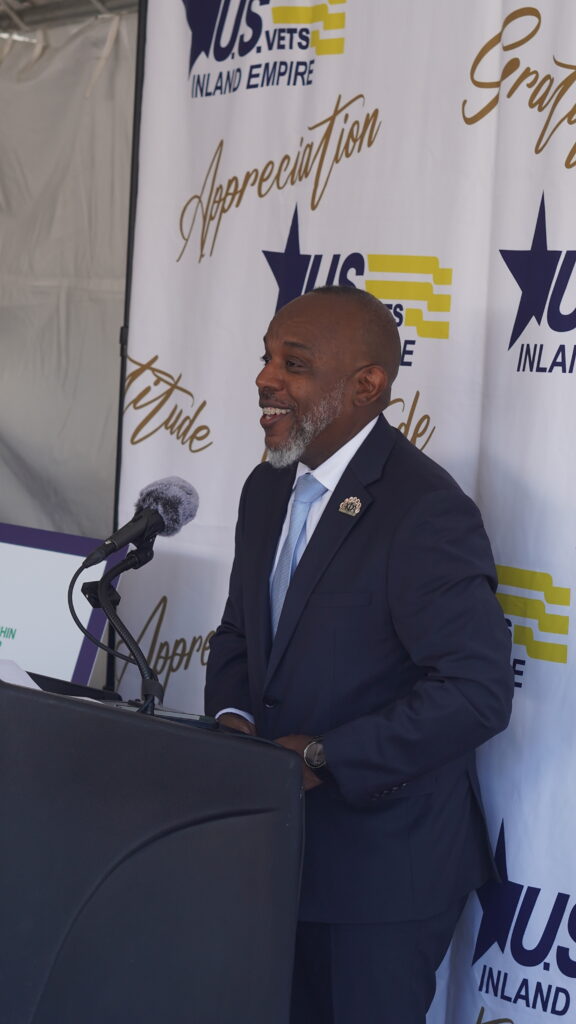
“That legacy of service and sacrifice will live on through this development,” Tran said.
San Bernardino County Supervisor Joe Baca Jr. said the county’s $5 million contribution reflected more than a financial commitment.
“This is about humanity,” Baca said. “It is about saying thank you to the veterans who served our country honorably and may have faced challenges after returning home.”
Baca said the project was made possible through collaboration among public agencies, nonprofit organizations and private funding partners. While he acknowledged it will not solve veteran homelessness on its own, he said it represents an important step toward reducing the crisis while offering compassion, stability and support.
Darryl Vincent, president and CEO of U.S.VETS, said the organization’s mission extends beyond building housing and focuses on ending and preventing veteran homelessness through long-term support, early intervention and daily service.
“U.S.VETS is not just about the buildings, the offices or even the landscaping,” Vincent said. “U.S.VETS is about the people serving and being served 24 hours a day, seven days a week, 365 days a year.”
Vincent said U.S.VETS operates more than 50 residential and service sites nationwide and has seen a reduction in veteran homelessness during his 23 years with the organization. He said the goal 30 years from now is for the organization to have worked itself out of a job because veteran homelessness is no longer a crisis. Prevention, he said, remains central to that mission, particularly by connecting veterans with support as they transition out of military service.
Supervisor Curt Hagman said the project also carries personal meaning. He said his father, a Vietnam veteran, returned home in need of services that were not available to him at the time.
“It may not solve everything, but it does change lives,” Hagman said. “And we have men and women in harm’s way overseas right now who may need these same services when they come home.”
Funding for the project includes support from Banc of California, the California Department of Housing and Community Development, City National Bank, the city of San Bernardino, the county of San Bernardino, Disabled Veteran Charities, R4 Capital and The Home Depot Foundation. Construction is already underway, with early site work having begun before the official groundbreaking.

Kathryn is the main contributor to the quiz section of LaDailyGazette.com. If you have an idea for a quiz, let us know.