


 Kathryn Sears
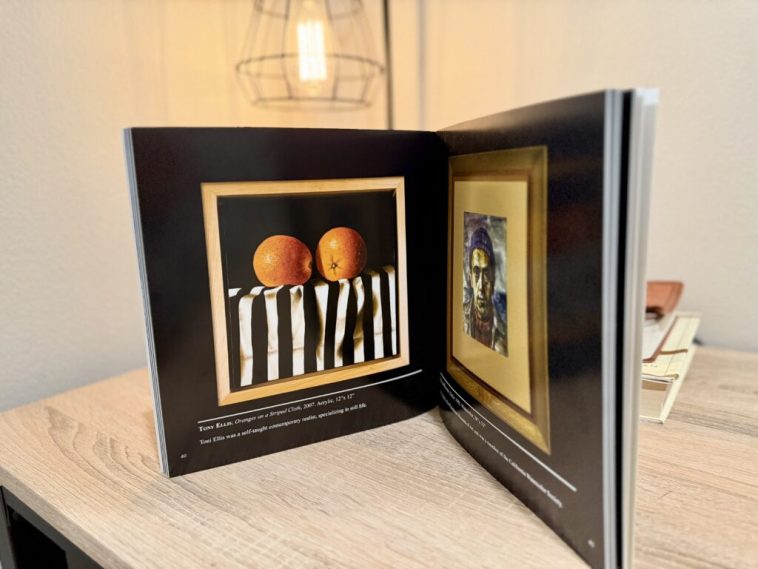
The 109th National Orange Show Fair will return to San Bernardino April 15-19, and one of its biggest attractions this year is an art exhibit that organizers say reflects both the fair’s citrus roots and the Inland Empire’s creative community.
The National Orange Show Fair will be held at 689 S. E St. and remains one of California’s historical state fairs, according to the California Department of Food and Agriculture.
Robyn Jutzy, the National Orange Show’s director of art and a board member, said the exhibit typically draws about 60 artists and over 100 pieces, an attraction that has drawn thousands of attendees since at least 1949–when the Fair held its inaugural All-Southern California Art Exhibit featuring 485 paintings.
“We have two categories,” Jutzy said. “We have an open category, which is anything they are inspired by, and then the citrus category.”
She said awards are given in both divisions, with first place receiving $700, second $500, third $300, and three honorable mentions at $100 each. This year, she said, the exhibit will also include a new best in show award.
Jutzy said the exhibit will be open throughout all five days of the fair and will feature not only contemporary entries, but also pieces from the Orange Show’s permanent collection.
“It dates back to the first show in the 1940s” Jutzy said, referring to the exhibit’s long-running history and the organization’s efforts over the years to continue purchasing artwork.
That continuity, organizers said, is important because the art show is directly tied to the fair’s larger mission. The National Orange Show began in 1911 as a celebration of the region’s citrus industry, with a permanent (then 43-acre) San Bernardino site selected in 1923, which was purchased with funds raised by a bond issue.
Patrick Garcia, a board member and immediate past board president, said the Fair has been making a stronger effort to reconnect more of its programming to that original purpose.
“That’s our mandate — to promote citrus and promote agriculture,” Garcia said.
That theme is expected to be visible throughout the exhibit, especially in the citrus category, which has historically featured paintings and other works inspired by orchards, fruit and the agricultural landscape that once defined much of the Inland Empire.
Garcia said the exhibit also helps make art more accessible to the public.
“During the exhibit, most of the pieces are for sale,” Garcia said. “At reasonable prices.”
He said younger visitors in particular have increasingly shown interest in buying smaller works, helping introduce a new generation to the exhibit and to local artists.
This year’s show is also expected to include student artwork from San Bernardino City Unified, alongside works from the Orange Show’s own collection. Garcia said that the expanded presentation will give visitors a broader view of artistic talent across the region.
“It’s important to make sure people know about it, come see it and help nurture it,” Garcia said. “Because if you don’t get people in there, they don’t realize how special it is.”
Organizers said the exhibit will be displayed in the Orange Pavilion, one of the major event spaces on the fairgrounds.
Beyond the exhibit hall, Jutzy said visitors may also notice new art already taking shape around the Orange Show grounds. Local muralist Christopher Mariscal is creating orange- and citrus-themed artwork on metal screening panels along the grounds.
“The beautification of it is becoming so evident, which makes my heart happy,” Jutzy said.
For Garcia, the exhibit is also personal. He said some of his earliest Orange Show memories are of receiving free school tickets as a child and visiting the fair that was once even more visibly tied to the region’s citrus economy.
“That’s all you could see for miles,” Garcia said. “You’d drive through orange groves for miles and miles and miles.”
The goal, organizers said, is not only to showcase art, but to remind the community that the National Orange Show Fair remains deeply connected to the history that shaped San Bernardino. The National Orange Show has since come a long way since its inaugural fair on March 6, 1911, when it was organized by the San Bernardino Chamber of Commerce for a city of just 12,000 residents at Fourth and E streets.
“I am always surprised that people don’t know about all the different types of events that are held here,” Garcia said. “Some people will ask me, ‘Do you guys still have the fair?’”
For those who do attend this year, the answer will include more than carnival rides and food. It will also include a gallery rooted in citrus, community and a tradition that organizers say still matters.
Historical background for this article was sourced from The History of the National Orange Show, 1911–1964 by Kenneth C. Jones, edited by Dr. Ernest F. Garcia in 2013.

Kathryn is the main contributor to the quiz section of LaDailyGazette.com. If you have an idea for a quiz, let us know.