


 Kathryn Sears
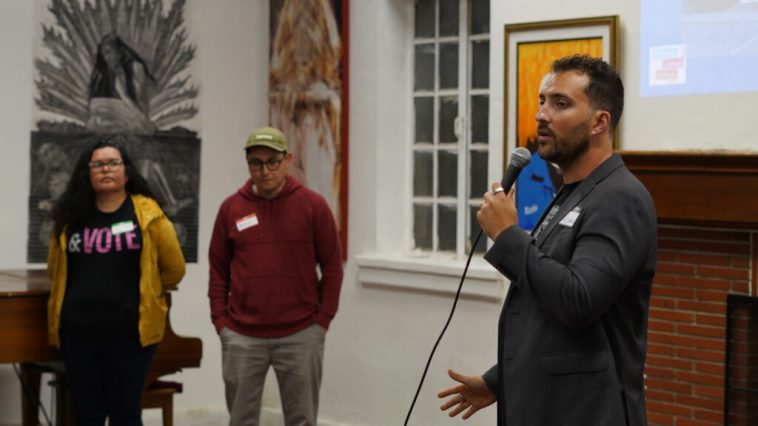
More than 50 artists, nonprofit leaders and residents gathered Feb. 12 at the Garcia Center for the Arts to chart San Bernardino’s next steps after the city’s bid for state cultural district designation fell short, transforming disappointment into a renewed push for funding, infrastructure and long-term investment in the arts.
The San Bernardino Arts Advocacy Gathering, hosted by the Garcia Center for the Arts, Arts Connection and SB Generation Now, marked both a celebration of progress and a candid assessment of what remains missing after San Bernardino ranked No. 19 among more than 80 applicants for a California Cultural District grant in June 2025 but was not selected as one of 10 districts designated by the California Arts Council for 2026 through 2030.
Cities including Riverside, San Diego and Oxnard were among those awarded the designation, which brings statewide recognition and increased opportunities for arts funding, tourism and economic development.
Community organizer Miriam Nieto of SB Generation Now said feedback from state officials made clear that San Bernardino’s challenge was not a lack of community support, but the absence of formal city infrastructure to sustain a cultural district.
“They told us, ‘you guys had the community, you guys had the organizations, you guys had the spirit. You guys have the people power,’” Nieto said. “But what you guys don’t have yet is that the city, the local government, doesn’t have the actual infrastructure to make sure that we move or give you guys something like the cultural district for you guys to even start to build on.”
Nieto said San Bernardino currently lacks a dedicated arts and culture department and faces limitations in its ability to administer grants or provide sustained support to arts organizations, placing grassroots groups in a difficult position despite growing momentum.
“We need more support,” she said. “We need concrete support. We’re gonna say, yes, we’re gonna help you, and here’s the funding for it. That’s what we want to get to.”
Arts Connection Executive Director Alejandro Gutierrez Chavez said the state’s feedback reinforced the need for a unified, community-driven vision backed by tangible investment.
“That next step … was because the city didn’t have its own vision and investment in the arts and culture and creative economy,” Gutierrez Chavez said. “And so now is the time that we come together to begin outlining the vision that has already been said by the community and putting some pressure from the city.”
Gutierrez Chavez also emphasized that reaching the semifinalist stage was itself a milestone, crediting sustained advocacy by artists, nonprofits and community media recognizing Inland Empire Community News’ coverage of the arts.
“The cultural district visit was a huge milestone for our city and for the people who advocated for arts and culture in our city for so long,” he said. “The nonprofits, the businesses, the artists, the leaders, you are all the reasons why we made it to the semifinals.”
Garcia Center for the Arts Executive Director Michael Segura said the cultural district proposal was rooted in months of community listening sessions and focused on the E Street Cultural Corridor, an area anchored by historic and cultural landmarks including the original McDonald’s museum, San Bernardino High School, Sturges Center for the Fine Arts and the Garcia Center itself.
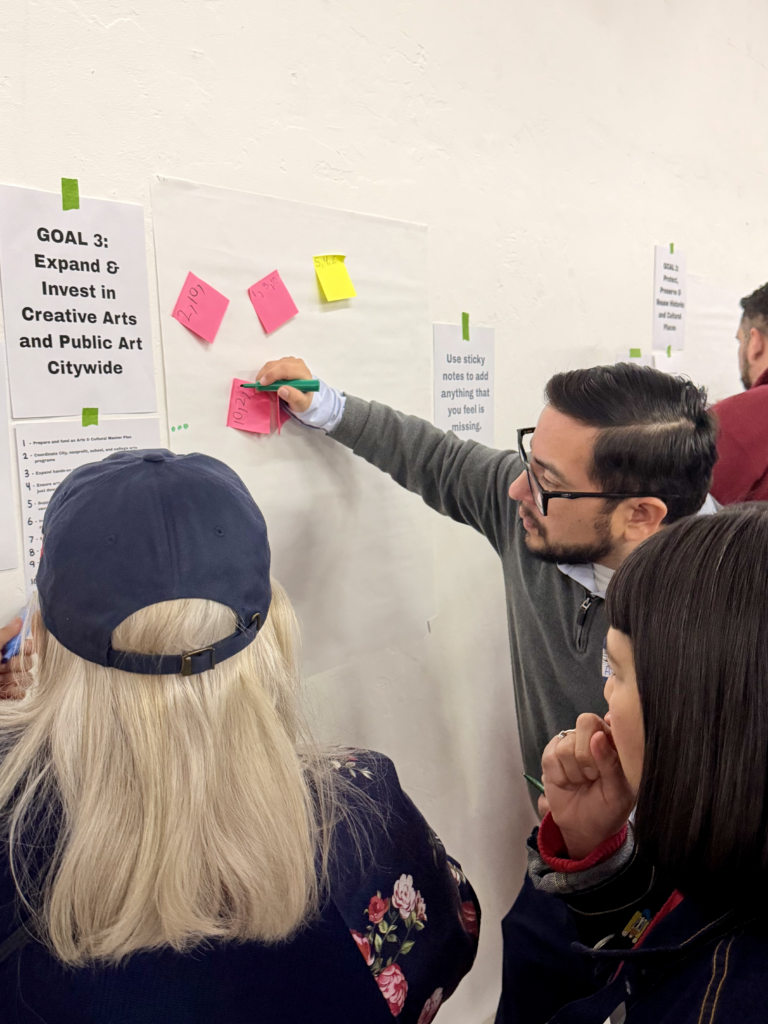
“We said, we need to make sure there’s community foot in this entire plan,” Segura said, noting that organizers hosted six sessions along the corridor to gather input and build a shared vision.
Segura said city officials have expressed support for pursuing cultural district designation and incorporating arts into the city’s broader planning efforts, but warned that planning alone is not enough.
“Currently, the city is in the process of pushing forward their general plan. So there will be a cultural elements section in there,” he said. “But as you know, just having a plan doesn’t mean that it’s getting funded.”
The two-hour gathering concluded with a collaborative ideation exercise, where participants filled sticky notes answering questions about priorities for the next 24 months, including how arts and culture can foster belonging, healing and accountability, and how to build a comprehensive cultural resource system.
Gutierrez Chavez said the meeting was designed not only to reflect on past efforts, but to develop a clear advocacy agenda moving forward.
“We became semifinalists, but now what?” he said. “We’re gathering here today to figure out collectively–what is next for us for the next 24 months and how we can accomplish it together.”
Organizers said the goal is to align community priorities, strengthen partnerships and advocate for dedicated public funding that can transform San Bernardino’s grassroots arts movement into a permanent cultural infrastructure.
For advocates, the semifinalist designation was not the end of the effort, but evidence that San Bernardino has the foundation to compete — and a roadmap for what must come next.

Kathryn is the main contributor to the quiz section of LaDailyGazette.com. If you have an idea for a quiz, let us know.