


 Kathryn Sears
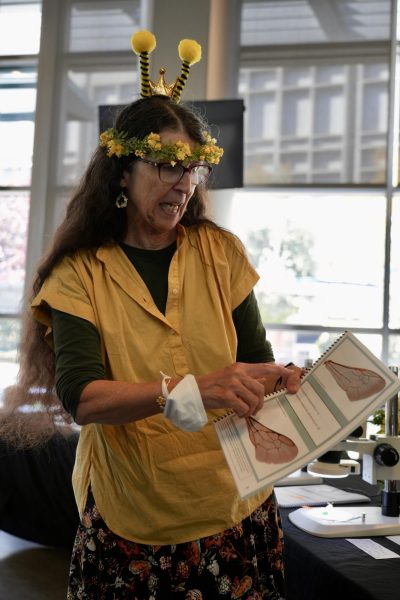
During Homecoming week at American River College, the buzz on campus hasn’t just been from the homecoming-related activities.—it also comes from the hundreds of native bees thriving on campus thanks to a research project led by ARC’s biology department.
The Native Bee Research and Conservation project launched in the summer of 2024 through a National Science Foundation Grant in which the goal was to protect California’s native bees. ARC biology professors Renee Shahrokh and Kathy Bradhsaw are leading the charge, supported by a team of student interns.
“It’s so fun to actually be doing something that’s going to be used,” said Professor Bradshaw, “Our bees have been barcoded and entered into databases available to researchers around the world. Students are contributing to real science.”
So far, the students have identified 195 genera of bees across five different families. The project isn’t just about counting them, it’s about understanding and preserving them.
Native bees play a vital role in pollination, particularly for plants like tomatoes which honeybees can’t pollinate effectively.
“We have to remember that the honeybee, the one that makes honey, isn’t actually native to California,” said Shahrokh, “Our local bees like bumblebees and carpenter bees are the ones that evolved alongside our native plants. Losing them would mean losing entire parts of our ecosystem.”
Students have learned to identify bees by their wing patterns, body structure and the presence or absence of their tiny leg spurs. These traits are what separate native bees from the non natives like honeybees.
“Bumblebees use what’s called buzz pollination,” said Shahrokh, “They vibrate their wings so powerfully that it shakes the pollen loose. Without them, we could actually lose certain crops. Every little detail tells a story. Even the tiny claws on their feet help them hang onto flowers while they feed.”
Under the guidance of their professors, they learned how to collect bees, identify them under microscopes and detail them on paper using modern research methods. Each one was labeled, barcoded and photographed from five different angles.
“It’s so fun to actually be doing something that’s going to be used,” said Bradshaw, “The bees our students collected have been entered into databases that are accessible to researchers around the world. They’re contributing real data that can help track the health of native bee populations.”
One of the most rewarding outcomes of the project for Bradshaw and Shahrokh has been the enthusiasm of the students. Bradshaw had a team of students participate directly and some volunteered out of curiosity and passion.
“Students would be here all day, in the 105 degree heat, outside all day writing things down and researching. It really shows there are people who genuinely care,” said Bradshaw, “They just wanted to come back every day. It’s amazing to see that kind of excitement for science.” About a dozen students participated last summer—some paid through the grant, others volunteering out of pure curiosity and passion.”
Students weren’t just collecting data, they were learning to think like scientists. One student even created a hand drawn illustration used in the project’s presentation.
Beyond the lab and field, the Native Bees project aims to leave a lasting mark on the ARC campus. According to Bradshaw, there are high hopes that the research will guide future horticultural planning, which is the encouragement of the use of native plants that support pollinators.
“Our landscaping crews have been incredibly supportive,” said Bradshaw, “They’ve worked around our survey areas, waiting to spray or mow until after we’ve finished collecting. We’d love to see more native gardens around campus designed specifically to help bees thrive.”
With the NSF grant set to run through 2028, Bradshaw and Shahrokh are optimistic that the project will continue through that. Creating an even bigger project that could eventually expand.
“Our goal is twofold,” said Bradshaw, “We want students to experience what real research feels like—and we want our campus to serve as a refuge for native bees. If we can do both, that’s success.”
As the buzz continues, one thing is certain. This isn’t just a science project, it’s a story of curiosity, collaboration and conservation.

Kathryn is the main contributor to the quiz section of LaDailyGazette.com. If you have an idea for a quiz, let us know.