


 Kathryn Sears
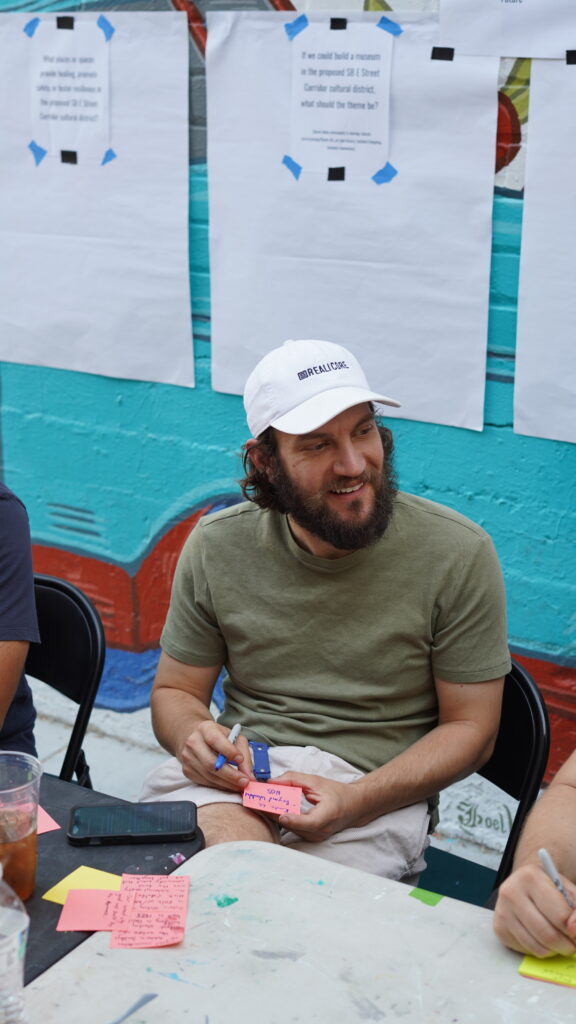
On July 17, community members, artists, and civic leaders gathered in San Bernardino’s new Sole Alley for a cultural input session aimed at shaping the city’s forthcoming California Cultural District designation.
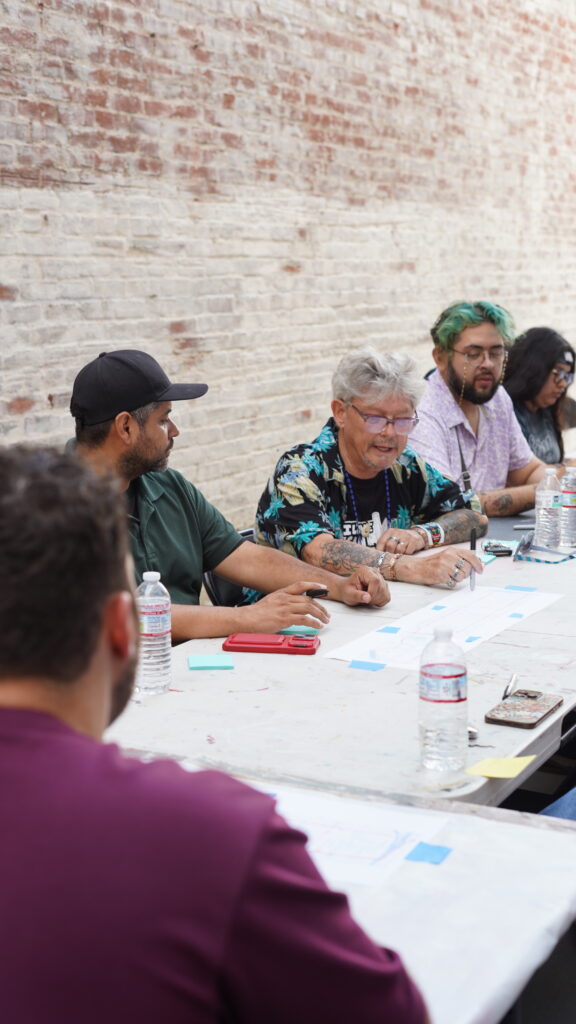
Hosted by the Garcia Center for the Arts, San Bernardino Generation Now, and Arts Connection, the workshop was held at Creative Grounds and marks a pivotal moment in the city’s push to preserve its cultural identity, fight artist displacement, and attract economic investment through the arts.
The session drew about 20 participants, including Councilmember Mario Flores, Realicore Real Estate Group co-founder David Friedman, Creative Grounds co-founder Duan Kellum, Three Little Blue Birds co-owner Tia Johnson, and artist Steven Bielak. The event was facilitated by Arts Connection Executive Director Alejandro Gutierrez Chavez and San Bernardino Generation Now Community Organizer Miriam Nieto.
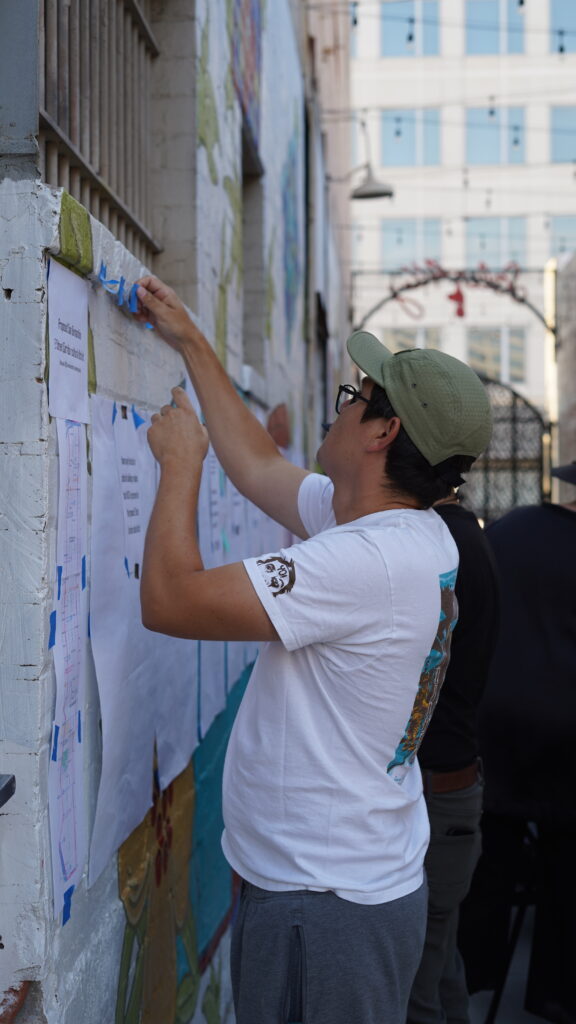
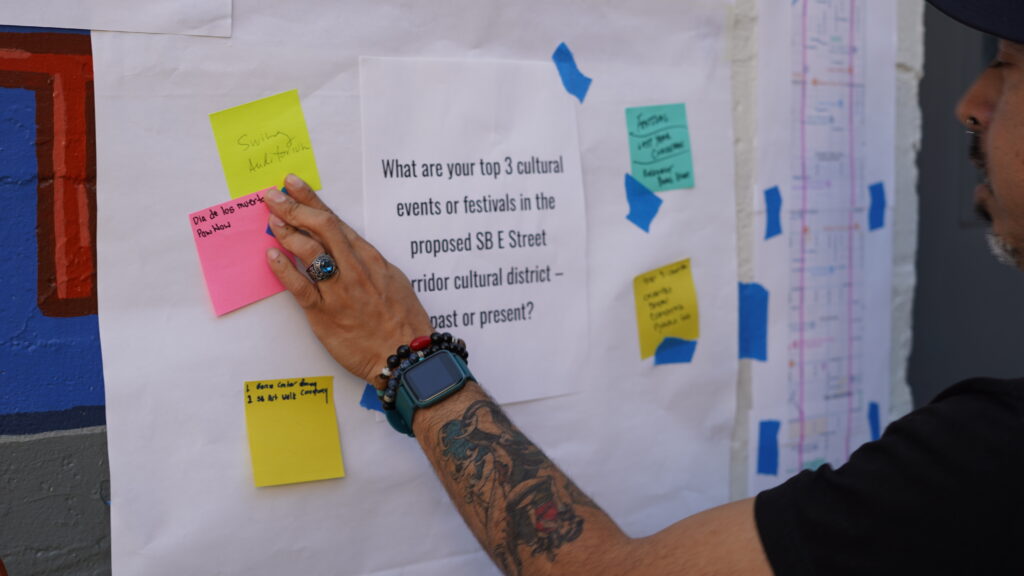
Artist Carolyn Schutter moderated the workshop, which prompted attendees to reflect on their favorite past and present cultural events and envision the future of arts and community in San Bernardino. Participants wrote their ideas on colorful sticky notes and posted them on boards taped to the alley’s brick walls.
Responses included nostalgic mentions of swing concerts at the Orange Show Auditorium, the ongoing Inland Empire Film Festival, Orange Show races, and the original Route 66 Rendezvous car show.
Michael Segura, executive director of the Garcia Center for the Arts, said the cultural district is about more than recognition—it’s about equity and sustainability.
“We want to fight cultural displacement and develop equity along this district,” Segura said. “To develop artist housing and cultural development from museums, galleries, small theaters, coffee shops—using our past and present to generate ideas for the future.”
Segura added that the feedback from the workshop will contribute to a cultural asset map, a key step in planning a sustainable and inclusive district for uptown San Bernardino and the Mt. Vernon area.
“We’re building a template to create a cultural district in uptown San Bernardino and beyond, to help attract investment and ensure sustainability,” he said.
David Friedman, co-founder of Realicore and the development partner for the application, emphasized the economic importance of the designation.
“Achieving this status is important to the small business community,” said Friedman. “Our city’s reputation can sometimes be discouraging to entrepreneurs, but not many people are aware of our rich history—McDonald’s, Taco Bell, and Food 4 Less all got their start here.”
“This designation will help San Bernardino amplify its success stories and usher in a new era of entrepreneurship,” he added.
Community organizer Ethan E. Flores, a Ward 1 City Council candidate in 2026, said the designation can help breathe new life into the city’s public spaces and cultural landscape.
“I want to see faces walking through, people breathing the art, eating the food, enjoying greenery on the streets,” said Flores. “I believe the future growth of our city will come from events like this.”
Flores said his vision includes open seating, fountains, a mix of sit-down restaurants and quick food spots, and even a local Thai food or quesadilla shop.
Nieto echoed attendees’ ideas, emphasizing the importance of preservation and artistic reuse of existing structures.
“I’m hearing that we want a lot of preservation and more understanding of how we can repurpose buildings in an artistic way to serve the community’s needs,” said Nieto.
What is a California Cultural District?
Established through Assembly Bill 189 in 2015 and administered by the California Arts Council, the California Cultural Districts Program recognizes neighborhoods with a high concentration of artistic and cultural assets. Each district is selected through a competitive application process and must demonstrate strong collaboration between arts organizations, local government, and small businesses.
Districts typically feature theaters, galleries, public art, performance spaces, artisan shops, festivals, and historically or architecturally significant sites. The program aims to support local artists, promote socioeconomic and ethnic diversity, preserve cultural heritage, and counteract artist displacement.
Selected districts receive a five-year state designation, technical assistance, joint marketing support, and eligibility for up to $10,000 in grant funding over two years. Beyond funding, the designation offers a formal framework for cultural preservation and economic growth through arts-driven community development.
Organizers say the July 17 input session is the first of several steps toward building a cultural district rooted in San Bernardino’s past, present, and future. The next Community Input Session is scheduled for Tuesday, July 29th, 5 PM – 8 PM in Kellogg Room B at the Feldheym Central Library.

Kathryn is the main contributor to the quiz section of LaDailyGazette.com. If you have an idea for a quiz, let us know.