


 Kathryn Sears
[ad_1]
By Grace Barlow | The Atlanta Voice | Word In Black
This post was originally published on Atlanta Voice

(WIB) – When Dr. Soyini Hawkins faced her own battle with uterine fibroids, she realized firsthand how limited and often confusing the treatment options could be.
“I had an open procedure. I had to be cut from waist to waist, and that recovery was hard,” Hawkins said. “This technology is out there that can treat these women in a very different way, with great outcomes. Why are we not given more of these options? So immediately I was drawn to that purpose behind my career to help women do better.”
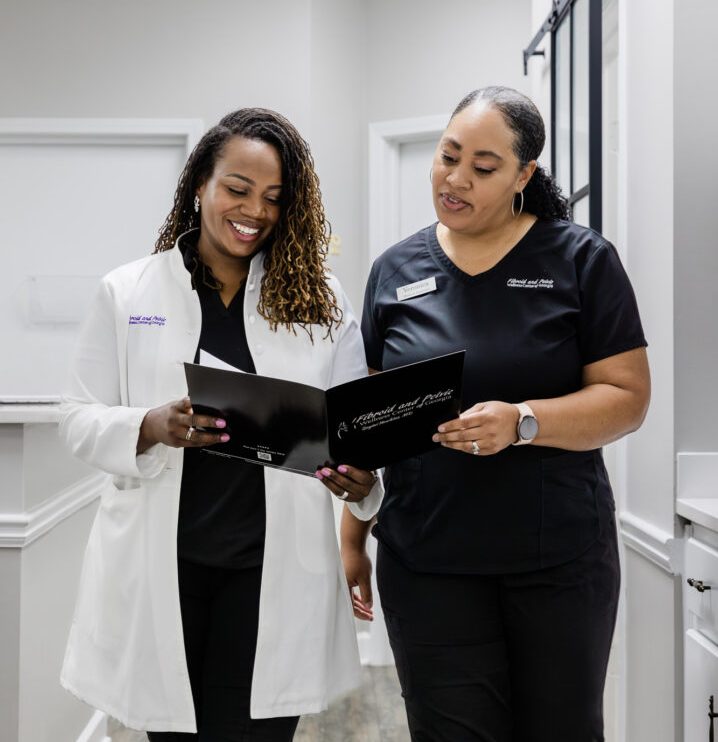
That question became the driving force behind her career. Today, as a minimally invasive surgeon and founder of the Fibroid and Pelvic Wellness Center of Georgia in suburban Atlanta, which she started nearly a decade ago, Hawkins is dedicated to expanding treatment options for the many women who share her story.
“Immediately, I was drawn to that purpose behind my career: to help women do better,” she says. “I wanted to be extremely intentional about the way I took care of fibroids and especially for Black women, who it disproportionately affects, women who look like me and suffer like me.”
Affecting more than 70% of women worldwide, uterine fibroids are the most common pelvic tumors among women of reproductive age, with women of color facing higher rates and more severe cases
“The reason it can affect all women is because we all create estrogen and progesterone from our ovaries, and that’s what feeds fibroids to grow,” Hawkins said.
But for Black women, the risk and impacts are even greater.
“There are specific genes that are seen ancestrally … that are directly related, it seems like are directly related to fibroids too,” Hawkins said. “Our fibroids are bigger, we’re more symptomatic, we suffer for longer, some of that has to do with some of those disparities… racially, socioeconomically… and should not be overlooked.”
Despite how common fibroids are, many women don’t seek treatment until their symptoms are severe, often because of stigma, silence, and missed opportunities for early care.
“Some of it lies in education, just an understanding of what’s normal,” Hawkins said. She added that doctors also have a role to play: “From a medical community standpoint, I think we also could do a better job of catching this, of asking the right questions, of not downplaying the symptoms that women are coming in for … as soon as we sniff that something might not be normal.”

Hawkins hopes that more awareness and early action will shift fibroid care toward prevention and earlier treatment. “I would rather us move towards the next decade of dealing with this fibroid pandemic into where we’re treating it more like a preventable disease. We’re intervening before it becomes distressful and disastrous for some women’s lives.”
She believes that early detection is key. “I think fibroids are like every other disease; if we can catch it sooner, we can do more, and some of the more is just education and lifestyle modifications, ” she said.
For Hawkins, the goal is bigger than removing fibroids; it’s about reminding women, especially women of color, that they deserve to be seen, heard, and cared for without shame or delay.
“For a lot of women that I take care of, we’re always second to everybody else. In my office, I need women to know that when you enter this threshold, this is a safe place. Nothing else matters,” Hawkins said
As Fibroid Awareness Month shines a light on this common condition, Hawkins’s work continues to turn her own experience into better options for women facing fibroids today.
Grace Barlow is a Discover The Unexpected Fellow.
The post Shedding Light on Fibroids: Breaking the Silence for Black Women’s Health appeared first on The Atlanta Voice.
Related
[ad_2]

Kathryn is the main contributor to the quiz section of LaDailyGazette.com. If you have an idea for a quiz, let us know.